Mtazamo Safaris

Lake Manyara

Lake Manyara National Park is a compact yet remarkably diverse safari destination in northern Tanzania, nestled at the base of the dramatic Great Rift Valley escarpment. Covering roughly 325–330 km² (with the shallow alkaline soda lake itself taking up a large portion), it sits about 125 km west of Arusha and is a classic first stop on Tanzania’s Northern Circuit (before Ngorongoro and the Serengeti).

Best Time to Visit Lake Manyara

Lake Manyara is a year-round destination, but the experience changes with the seasons:

  • Dry season (June–October): Generally the best overall for wildlife viewing. Vegetation thins, animals concentrate near remaining water, roads are easier, and sightings of elephants, buffalo, and tree-climbing lions are more reliable. Clear skies and fewer mosquitoes. Peak months are often July–October.
  • Wet/green season (November–May): Lush scenery, waterfalls cascading down the escarpment, and peak birdlife (especially flamingos and migrants). January–February often offer a good balance of clearer weather and active wildlife. March–May (long rains) can be muddy in places but bring dramatic skies, fewer crowds, and excellent photography.

For flamingos and birdwatching: November–April (especially when the lake is fuller). For classic game viewing and tree-climbing lions: June–October.

A lake Manyara Highlights

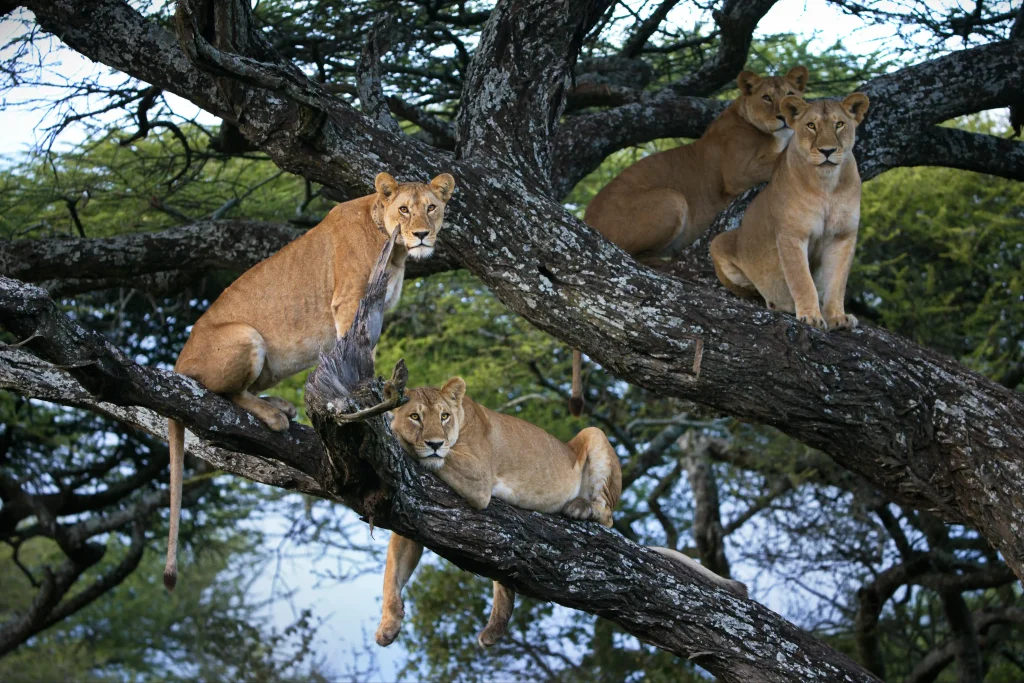
Tree climbing lions

One of the few places in Africa (alongside parts of Tarangire and Uganda’s Ishasha) where lions regularly rest in acacia, fig, or mahogany trees. They climb to escape insects, catch breezes, or gain a vantage point. Sightings are not guaranteed but are most common in the woodlands during the hotter parts of the day in the dry season.

Massive flamingo flocks

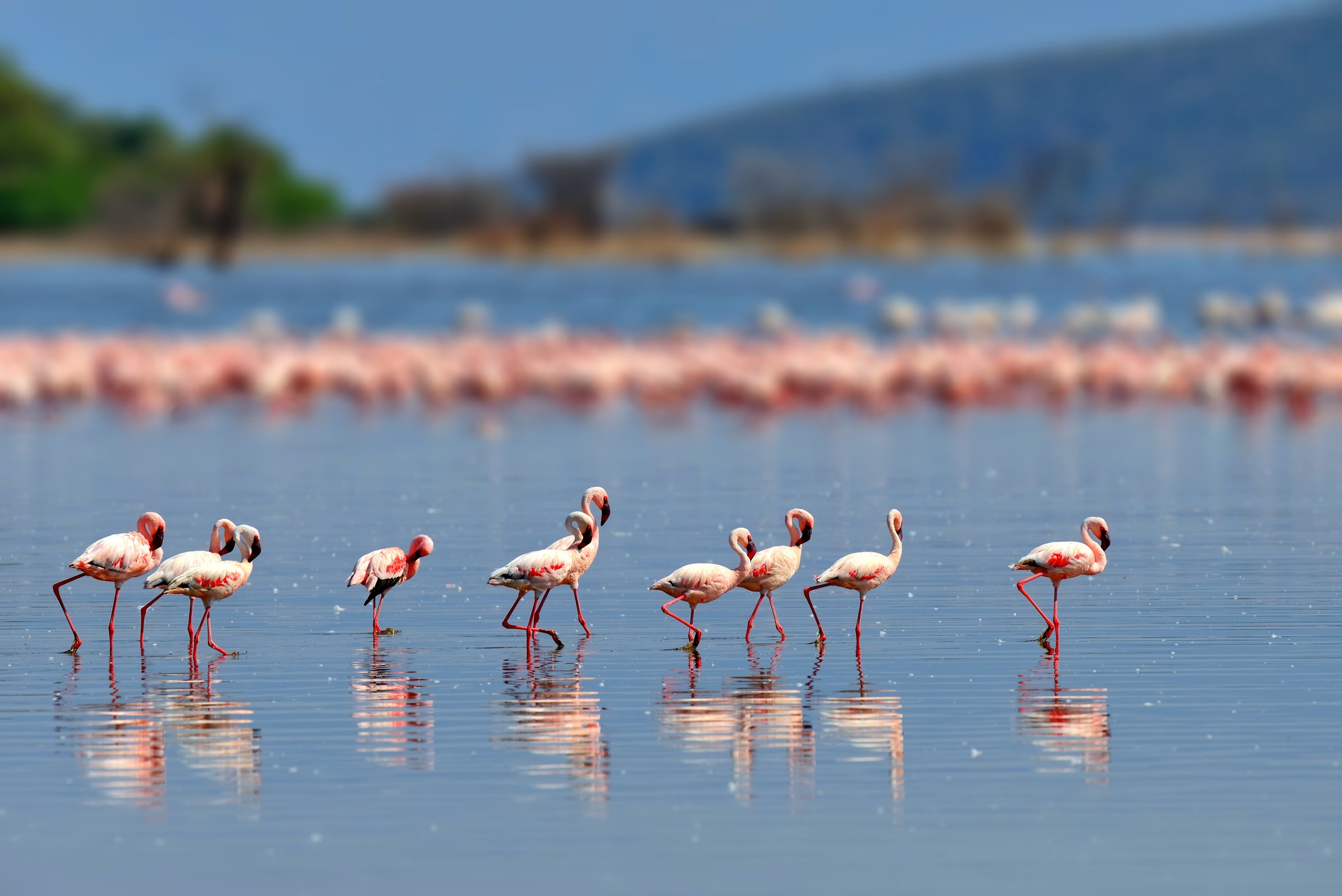
When conditions are right (higher water levels), tens of thousands (sometimes far more) of lesser (and some greater) flamingos form a striking pink fringe along the alkaline shoreline, feeding on spirulina algae.

Exceptional birdlife

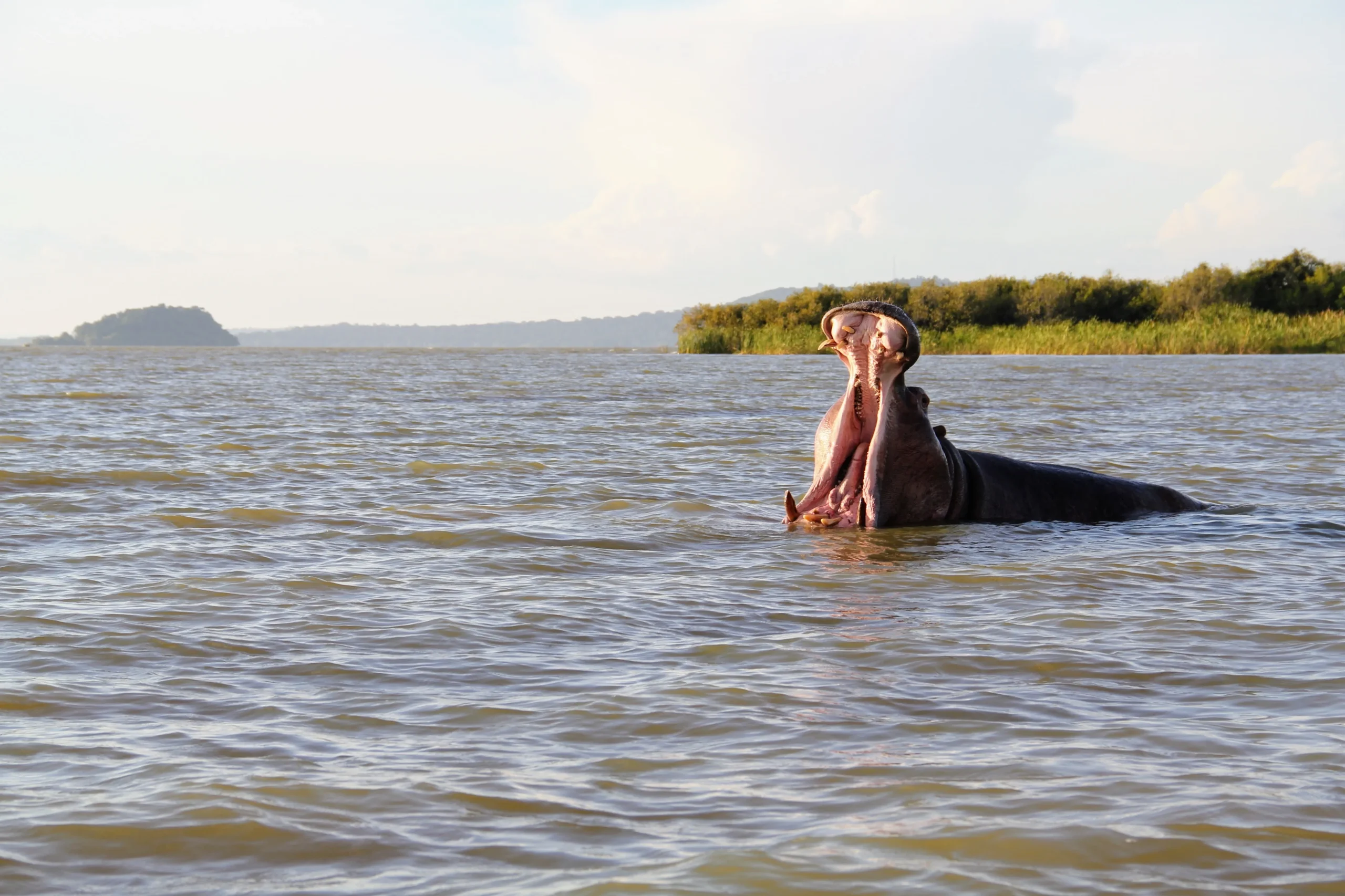
Over 400 species recorded. Expect hippos, pelicans, storks, herons, kingfishers, bee-eaters, hornbills, and many waterbirds. The park is a strong birding destination.


Related Packages